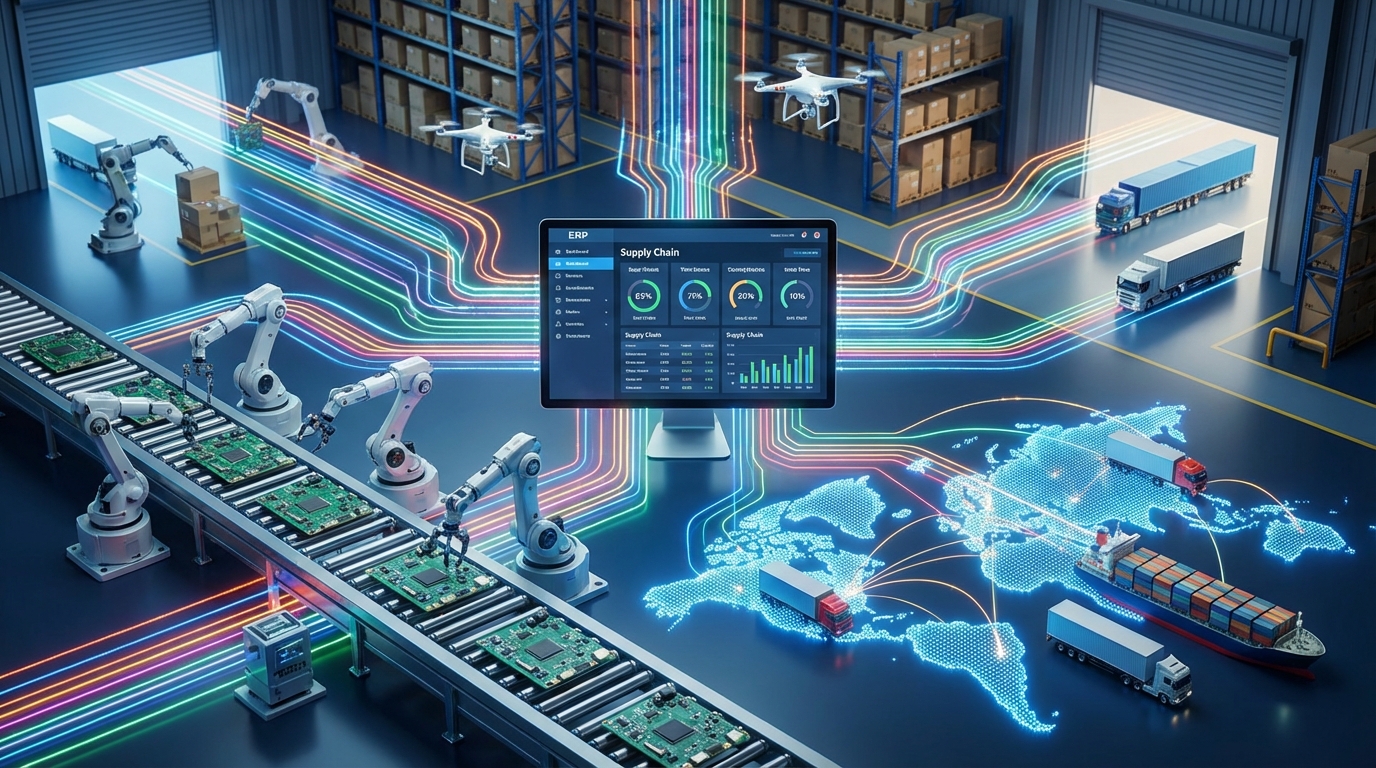
The electronics industry moves at breakneck speed. Today’s cutting-edge device is tomorrow’s outdated technology. In this environment, the margin for error is razor-thin. Electronics brands are not just battling competitors; they are battling time, component scarcity, and incredibly complex logistics networks.
Beneath the sleek exterior of a finished gadget lies a chaotic web of global suppliers, intricate Bills of Materials (BOMs), and volatile market demands. Managing this without a clear view is like driving fog. This is why Enterprise Resource Planning (ERP) systems have evolved from simple back-office tools into the essential nervous system for supply chain visibility in the electronics sector.
The Unique Fragility of Electronics Supply Chains
Why is visibility more critical for electronics than perhaps any other industry? The challenges are distinct and severe:
- Component Scarcity and Allocation: As recent global chip shortages have proven, a lack of visibility into tier-2 or tier-3 supplier inventory can halt production lines entirely. Brands need to know not just what their immediate suppliers have, but what their suppliers have.
- Rapid Product Lifecycles: Electronics become obsolete quickly. Holding too much inventory is a massive financial risk, while holding too little means missed revenue during peak demand windows.
- Complex Compliance (RoHS/WEEE): Tracking hazardous substances and ensuring environmental compliance across thousands of components requires granular data transparency that manual spreadsheets cannot provide.
How ERP Acts as the “Control Tower”
A modern ERP system integrates crucial business functions—procurement, manufacturing, inventory management, order processing, and logistics—into a single source of truth. It replaces siloed departments with a unified view.
Real-Time Data Integration
Instead of waiting for end-of-day reports or email updates from suppliers, an ERP with strong supply chain integration provides near real-time data. When a component supplier updates their delivery timeline in the system, it immediately impacts your production schedule and informs sales teams of potential delays.
Connecting the Dots
ERP allows an electronics brand to trace a serialized finished good all the way back to the specific lot numbers of the raw components used to build it. This traceability is vital not just for quality control and recalls, but for understanding the exact status of goods in transit.
Key Benefits of Enabled Visibility
Investing in ERP-driven visibility transforms supply chain operations from reactive to proactive.
- Proactive Risk Mitigation: You can identify bottlenecks before they become crises. If an ERP dashboard alerts you that a key capacitor is stuck at a port due to a strike, procurement can immediately pivot to pre-approved alternative suppliers.
- Optimized Inventory Levels: By balancing accurate demand forecasts against real-time supply chain data, brands can adopt Just-in-Time (JIT) manufacturing more effectively, freeing up working capital previously tied up in safety stock.
- Improved Customer Satisfaction: In the electronics world, delivery promises matter. Visibility allows for accurate Available-to-Promise (ATP) dates. When you know exactly where inventory is, you can set realistic expectations with distributors and end consumers.
Conclusion
In the volatile world of consumer electronics, ignorance is not bliss; it is a profound business risk. True supply chain visibility, powered by a robust ERP, is no longer a luxury—it is essential infrastructure. By shining a light on every link in the chain, from the smallest transistor to the final shipping container, electronics brands can navigate uncertainty, ensure compliance, and deliver the next big innovation on time.