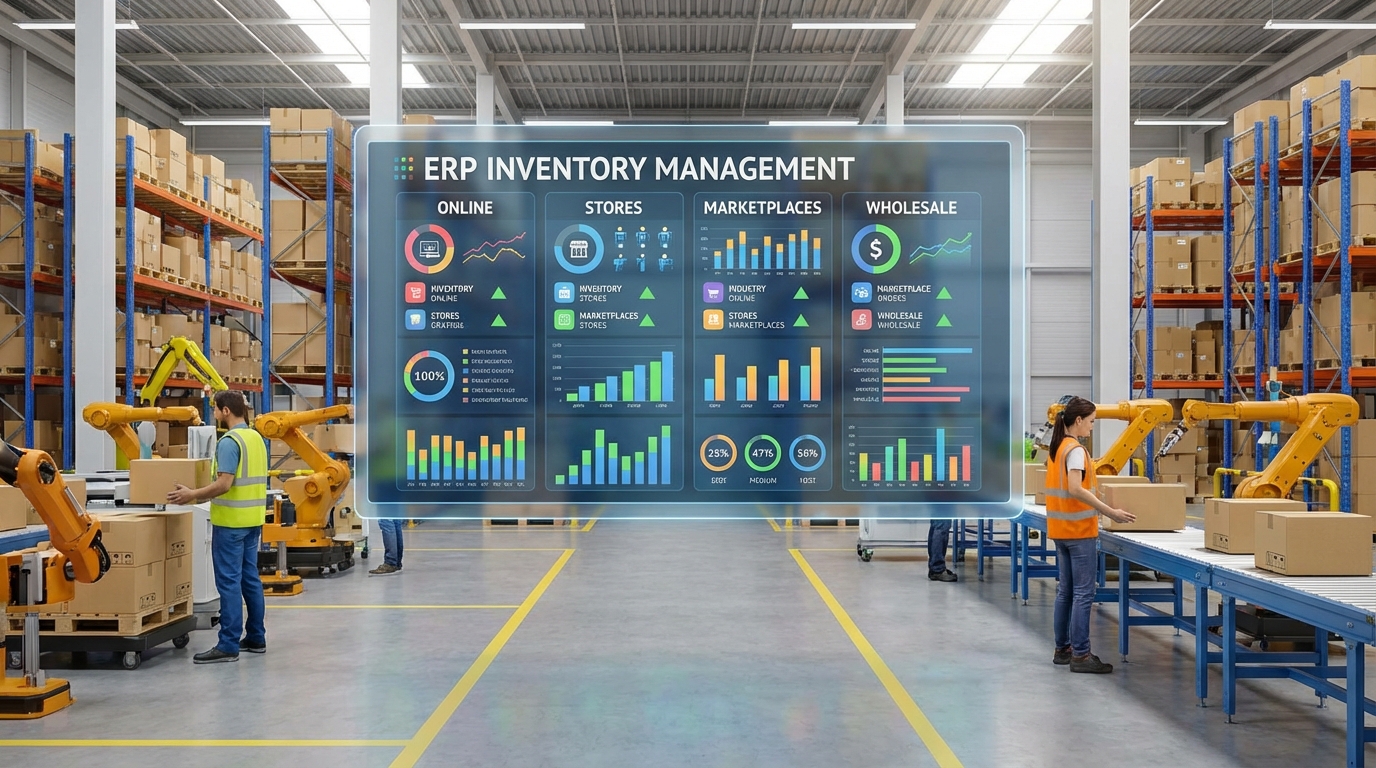
In today’s retail landscape, selling through a single venue is rarely enough to sustain high growth. Modern retailers are embracing multi-channel strategies—selling simultaneously on their own e-commerce site (like Shopify or Magento), third-party marketplaces (Amazon, eBay), social media platforms, and physical brick-and-mortar stores.
While opening these diverse revenue streams is exciting, managing the backend operations can quickly become a nightmare. The biggest challenge? Inventory visibility. Without the right systems, you risk overselling products you don’t have, or tying up cash in excess stock. This is where robust Enterprise Resource Planning (ERP) inventory management software becomes indispensable.
The Multi-Channel Inventory Disconnect
Imagine a scenario: A customer walks into your physical store and buys the last blue sweater in size medium. Five minutes later, an online shopper on Amazon purchases the exact same sweater because your systems haven’t synced yet. You now have an oversold order, a frustrated online customer, and a potential negative review.
Relying on spreadsheets or disconnected, standalone inventory apps creates data silos. Manual updates are slow and prone to human error, leading to inconsistent customer experiences across channels.
How ERP Bridges the Gap
An ERP system acts as the central nervous system for your entire business. Unlike basic inventory tools, an ERP integrates inventory management directly with accounting, procurement, sales, and shipping. For multi-channel retailers, it serves as the “single source of truth.”
Real-Time Synchronization
The primary benefit of ERP inventory management is real-time automation. When a sale occurs on any channel, the ERP instantly:
- Deducts the item from your master inventory record.
- Triggers an accounting entry for revenue and Cost of Goods Sold (COGS).
- Pushes the updated stock level to all connected sales channels immediately.
This instantaneous syncing virtually eliminates the risk of selling inventory you no longer physically possess.
Key Features for Multi-Channel Success
When evaluating ERP software for retail, look for features that specifically address multi-channel complexities:
- Centralized Product Data: Manage descriptions, pricing, and images in one place and push updates everywhere.
- Warehouse Management (WMS): Tools to optimize picking, packing, and shipping processes, even across multiple warehouse locations.
- Automated Order Routing: Intelligent rules that automatically route orders to the best fulfillment center based on stock availability and customer location.
- Demand Forecasting: Analyzing historical sales data across all channels to predict future inventory needs and prevent stockouts.
Conclusion: Foundation for Scale
Moving to an ERP solution is a significant step, but for multi-channel retailers aiming for scale, it is no longer optional. It transforms inventory management from a reactive, chaotic struggle into a proactive, strategic advantage. By centralizing your operations with an ERP, you ensure that your infrastructure can handle the volume as your sales channels grow.