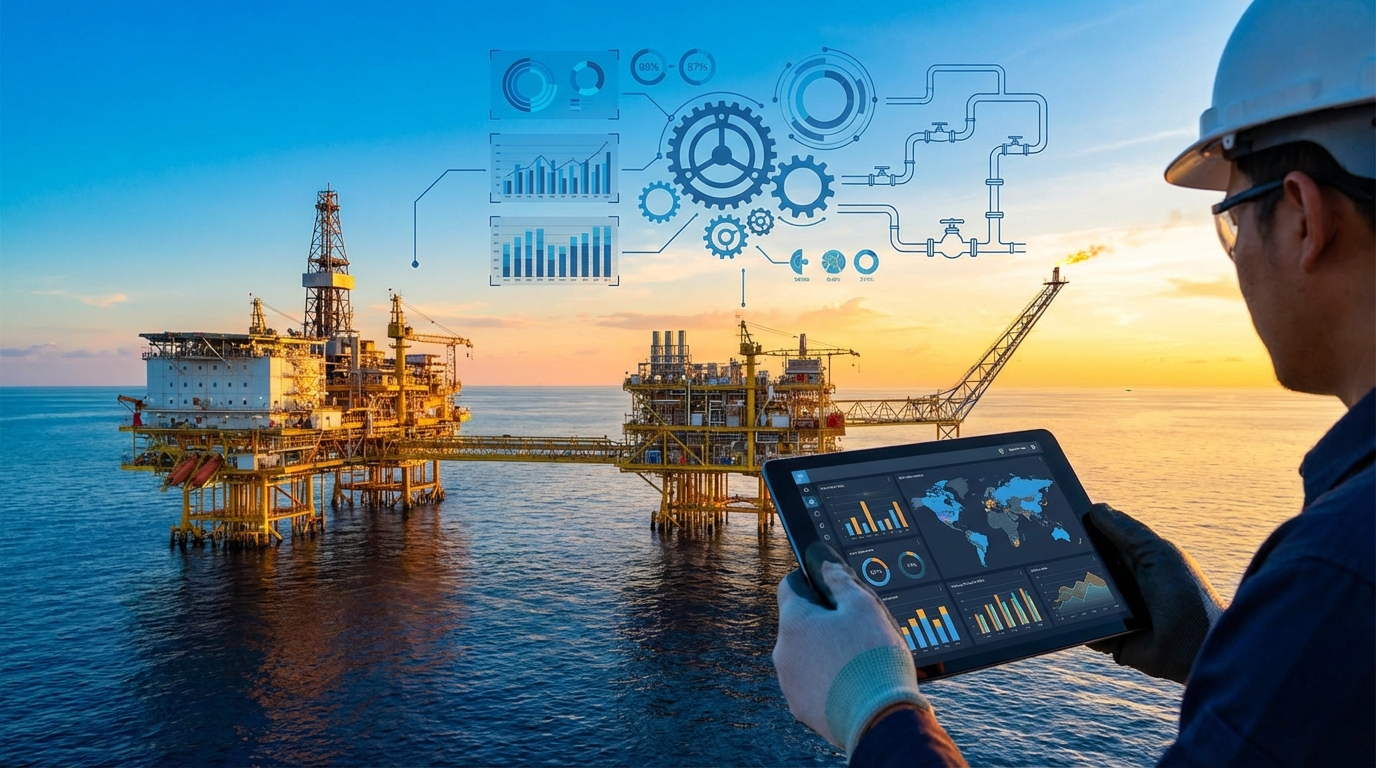
The oil and gas industry operates on a scale massive scope and complexity. From upstream offshore rigs battling harsh elements to midstream pipelines stretching across continents and downstream refineries processing hazardous materials, the sector relies heavily on expensive, mission-critical infrastructure. Managing these assets effectively isn’t just about profitability; it’s a matter of safety, regulatory compliance, and operational survival in a volatile market.
In the past, asset management in this sector was often siloed—maintenance teams used one system, procurement used another, and finance used a third. This disjointed approach leads to data gaps, inefficient maintenance schedules, and inflated costs. Enter modern Enterprise Resource Planning (ERP). An ERP system designed for the unique demands of the energy sector acts as a central nervous system, unifying these disparate functions and transforming how organizations manage the entire lifecycle of their physical assets.
The Unique Challenges of Energy Assets
Oil and gas assets are notoriously difficult to manage for several reasons. They are geographically dispersed, often located in remote or hazardous environments. The equipment is highly specialized, capital-intensive, and subject to rigorous Health, Safety, and Environment (HSE) regulations.
Furthermore, the cost of asset failure is astronomical. Unplanned downtime on a refinery unit or a pipeline stoppage can cost millions in lost revenue per day, not to mention the potential environmental and reputational damage. Therefore, shifting from reactive maintenance to proactive asset management is essential.
How ERP Centralizes Asset Management
An integrated ERP solution moves beyond basic computerized maintenance management systems (CMMS) by connecting asset data directly with the broader business operations. It breaks down departmental walls. When asset management is integrated within an ERP, a maintenance work order isn’t just a task list; it automatically ties into inventory to reserve spare parts, alerts procurement if stock is low, and updates financial records regarding asset depreciation and maintenance costs.
Key Benefits of ERP-Driven Asset Management
Implementing a robust ERP system offers transformative benefits for oil and gas operators looking to maximize asset value:
- Shift to Predictive Maintenance: Instead of relying on fixed schedules or waiting for equipment to fail, ERP systems can integrate with IoT sensors on field equipment. This real-time data allows companies to predict failures before they occur, scheduling maintenance only when necessary and reducing costly unscheduled downtime.
- Enhanced Regulatory Compliance and Safety: The oil and gas industry faces intense scrutiny. An ERP maintains a complete, auditable history of every asset, including inspections, maintenance activities, and safety certifications. This ensures compliance with HSE regulations and simplifies reporting to governing bodies.
- Integrated Inventory and Procurement: One of the biggest inefficiencies in maintenance is waiting for parts. By linking asset management with supply chain modules, ERP ensures that the necessary spare parts are available at the right location when needed, optimizing inventory holding costs without risking operational delays.
- Total Cost of Ownership (TCO) Visibility: An ERP provides a holistic view of an asset’s financial life from acquisition to decommissioning. Decision-makers can analyze maintenance costs versus replacement costs with accurate data, leading to smarter capital expenditure decisions.
Conclusion
In an industry defined by volatile prices and immense operational pressure, efficient asset management is a critical differentiator. An ERP system is no longer just a back-office financial tool for oil and gas companies; it is a strategic operational platform. By integrating asset management into the core of the business through ERP, energy companies can ensure greater reliability, ensure safety compliance, and ultimately, secure better margins in a challenging environment.