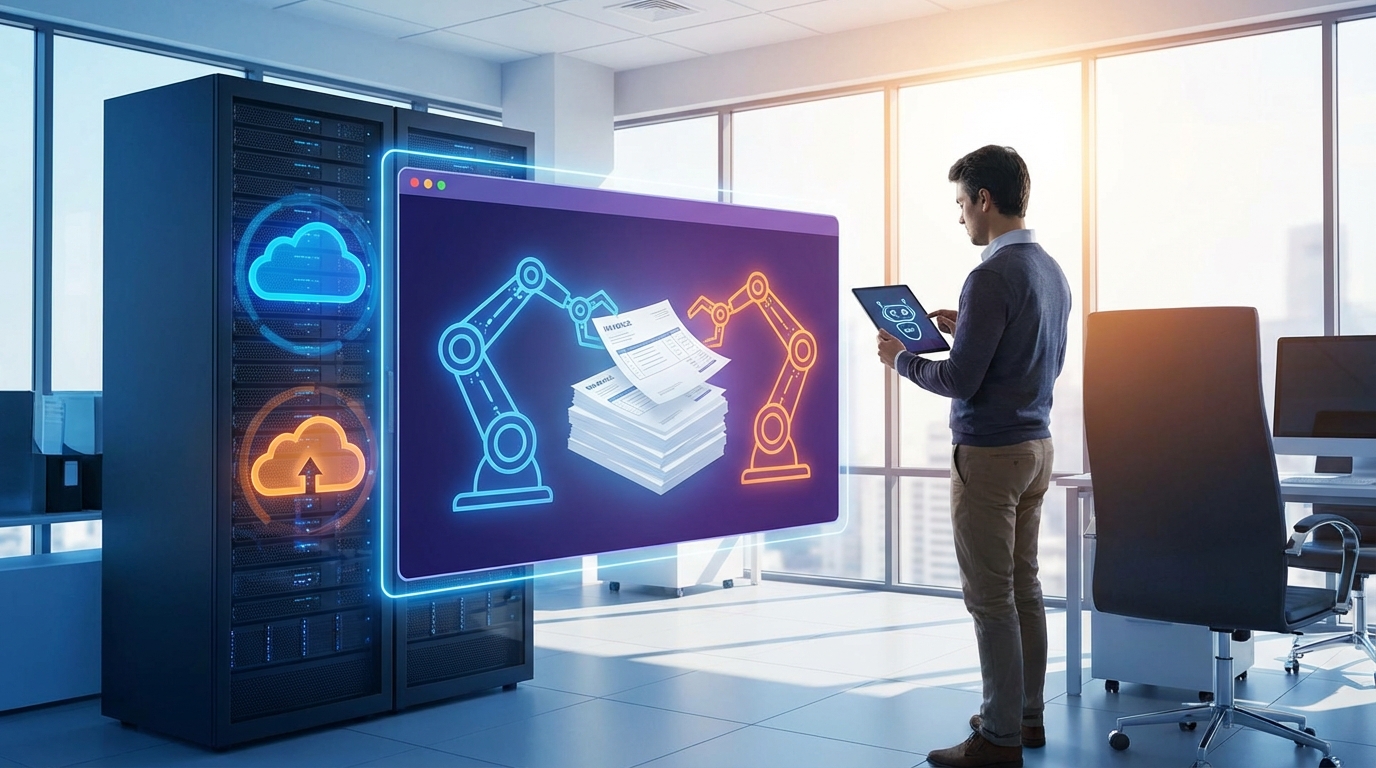
The End of the Paper Chase
For decades, the Accounts Payable (AP) department has been characterized by towering stacks of paper, endless email attachments, and the tedious, repetitive rhythmic clicking of manual data entry. It is slow, error-prone, and frankly, a drain on human talent. However, a powerful technological convergence is reshaping this landscape. By marrying the centralized power of Cloud ERP (Enterprise Resource Planning) with highly specialized automated invoice processing bots, businesses are turning a back-office bottleneck into a strategic advantage.
The Foundation: Why Cloud ERP Matters
Legacy, on-premise ERP systems were often rigid silos that resisted integration. Cloud ERP changed the game. By existing in the cloud, these systems are inherently designed for connectivity, real-time data access, and scalability. They serve as the single source of truth for financial data. But a powerful engine still needs fuel. If you are manually keying data into a state-of-the-art Cloud ERP, you are driving a Ferrari in first gear. This is where automation enters the picture.
Enter the Bots: Intelligent Digital Workers
Automated invoice processing bots—often powered by Robotic Process Automation (RPA) and Artificial Intelligence (AI)—are digital workers designed for a specific task. Unlike humans, they don’t get tired, distracted, or fat-finger a decimal point after lunch.
Here is how the workflow transforms:
- Capture: Instead of a human monitoring an inbox, a bot automatically monitors email addresses or vendor portals for incoming invoices (PDFs, images, electronic formats).
- Extraction: Using advanced technologies like Optical Character Recognition (OCR) and AI, the bot “reads” the document. It intelligently identifies key fields: vendor name, purchase order number, invoice date, line item details, and total amounts.
- Validation and Integration: The bot doesn’t just read; it thinks. It logs into the Cloud ERP and performs a 3-way match (comparing the invoice to the Purchase Order and the Goods Receipt). If everything matches, it posts the invoice for payment automatically. If there is a discrepancy, it flags it for human review.
The Tangible Benefits of Automation Integration
Combining these technologies isn’t just about neat tech; it’s about measurable business outcomes.
- Hyper-Speed and Efficiency: Invoice cycle times drop from weeks to days or even hours. Bots work 24/7, ensuring invoices are processed immediately upon arrival.
- Cost Reduction: Faster processing means capturing early payment discounts and eliminating late fees. More importantly, the operational cost per invoice processed drops significantly as manual touchpoints vanish.
- Improved Accuracy: By removing manual data entry, human error is virtually eliminated, leading to cleaner financial data and easier audits.
- Elevating Human Talent: This is the most crucial benefit. When your finance team is freed from drudgery, they can focus on high-value tasks like financial analysis, managing vendor relationships, and strategic forecasting.
Conclusion
The integration of automated bots with Cloud ERP systems is no longer a futuristic concept for industry giants; it is becoming standard operating procedure for competitive businesses of all sizes. It moves finance away from historical record-keeping and toward real-time strategic insight. By embracing this automation, companies don’t just process invoices faster; they unlock the full potential of their financial operations.