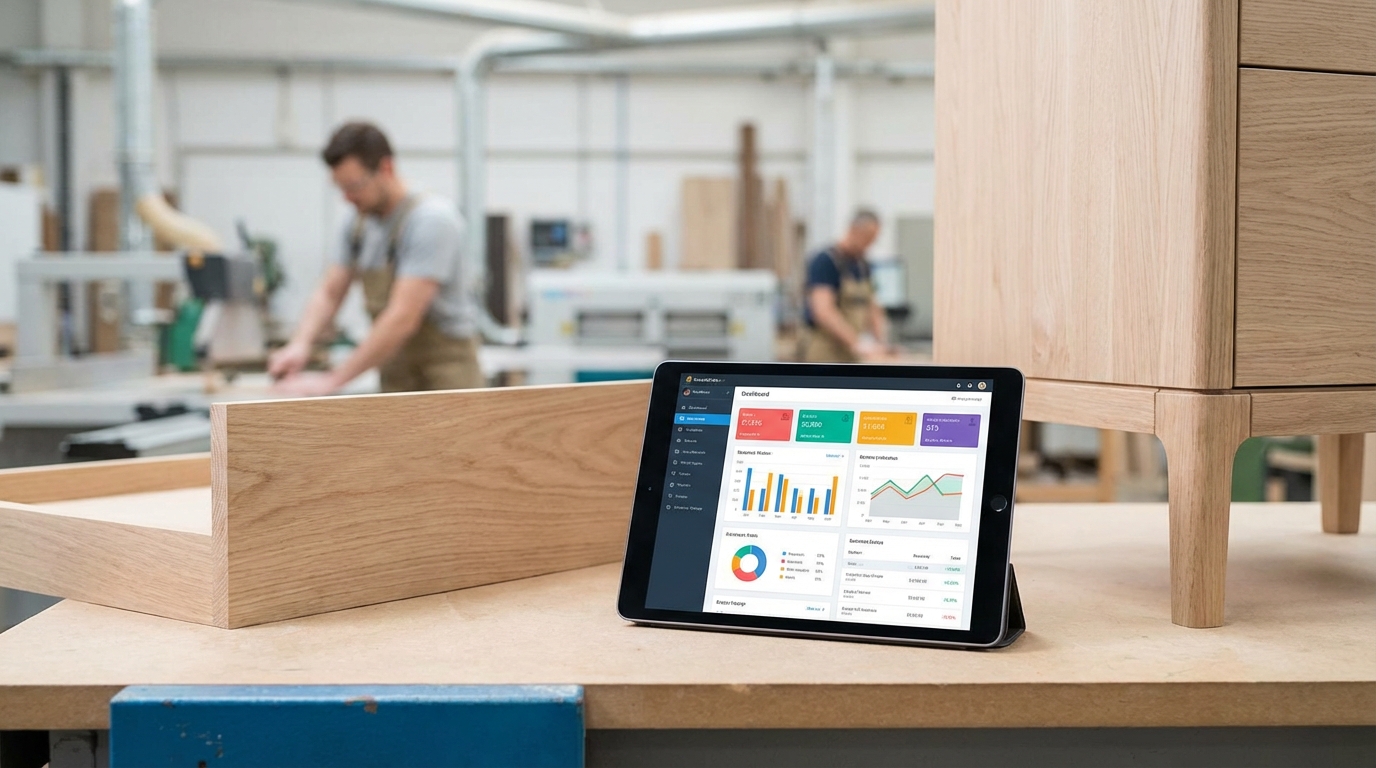
From Sawdust to Software: Bridging the Gap
For many wood furniture manufacturers, the shop floor is a place of craftsmanship and controlled chaos. The smell of sawdust is the smell of progress. But in the back office, chaos often reigns supreme. Are you still managing complex Bill of Materials (BOMs), lumber inventory, and custom order tracking using a patchwork of spreadsheets and whiteboards?
There is a common misconception that Enterprise Resource Planning (ERP) software is only for massive corporations with six-figure IT budgets. For the small-to-medium woodshop, the term ‘ERP’ sounds expensive and overly complicated. The truth, however, is that the software landscape has changed. Affordable, agile ERP solutions now exist that cater specifically to manufacturers who need to balance custom work with standard production lines without breaking the bank.
Why Standard Business Software Fail Woodworkers
Generic accounting software cannot handle the realities of furniture manufacturing. Woodworking has unique challenges that require specialized tools:
- Material Variability: You aren’t buying identical widgets. You are buying lumber varying by grade, species, and dimension. Tracking board feet versus linear feet matters.
- Waste Factors: Calculating yield is crucial. How much usable product do you get from a rough sawn plank? If your software can’t account for kerf and defects, your costing is wrong.
- Complex BOMs: A single cabinet might require raw wood, pre-processed panels, hardware, finishing materials, and labor across three different departments.
Defining “Affordable” in the Modern ERP Era
So, what does an affordable ERP look like for a furniture maker today? It usually means moving away from clunky, on-premise servers and towards cloud-based SaaS (Software as a Service) models. These systems offer lower upfront costs, predictable monthly subscriptions, and modular implementation—meaning you only pay for the features you need right now.
Must-Have Features for the Budget-Conscious Shop
When evaluating affordable ERP options, you shouldn’t compromise on the core functionalities that drive efficiency in woodworking. Focus your search on systems that excel in these areas:
- Dynamic Bill of Materials and Routing: You need the ability to handle custom dimensions easily. If a customer wants a standard table stretched by six inches, your ERP should automatically adjust material requirements and labor estimates.
- Real-Time Work in Progress (WIP) Tracking: Where is order #1024? Is it in the cutting department, assembly, or the finishing booth? Knowing exactly where jobs are on the floor is essential for accurate delivery estimates.
- Accurate Job Costing: This is where affordable ERP pays for itself. By tracking actual labor hours and precise material usage against a specific job, you will finally know which product lines are profitable and which are bleeding money.
- Inventory Management with Dimensional Support: The system must handle different units of measure smoothly, tracking hardware by the piece and lumber by volume.
Conclusion: An Investment in Scalability
Implementing an ERP system, even an affordable one, requires time and dedication. However, continuing to rely on manual processes sets a hard ceiling on your growth. An effective ERP solution organizes the operational mess, allowing you to take on more orders with the same resources.
Don’t let the fear of technology hold your shop back. By focusing on cloud-based, manufacturing-specific solutions, you can find a system that supports your craftsmanship rather than complicating it. It is time to stop chasing paperwork and start focusing on what you do best: creating beautiful furniture. For more insights on modernizing your manufacturing capabilities, consider researching industry-specific digital transformation resources.