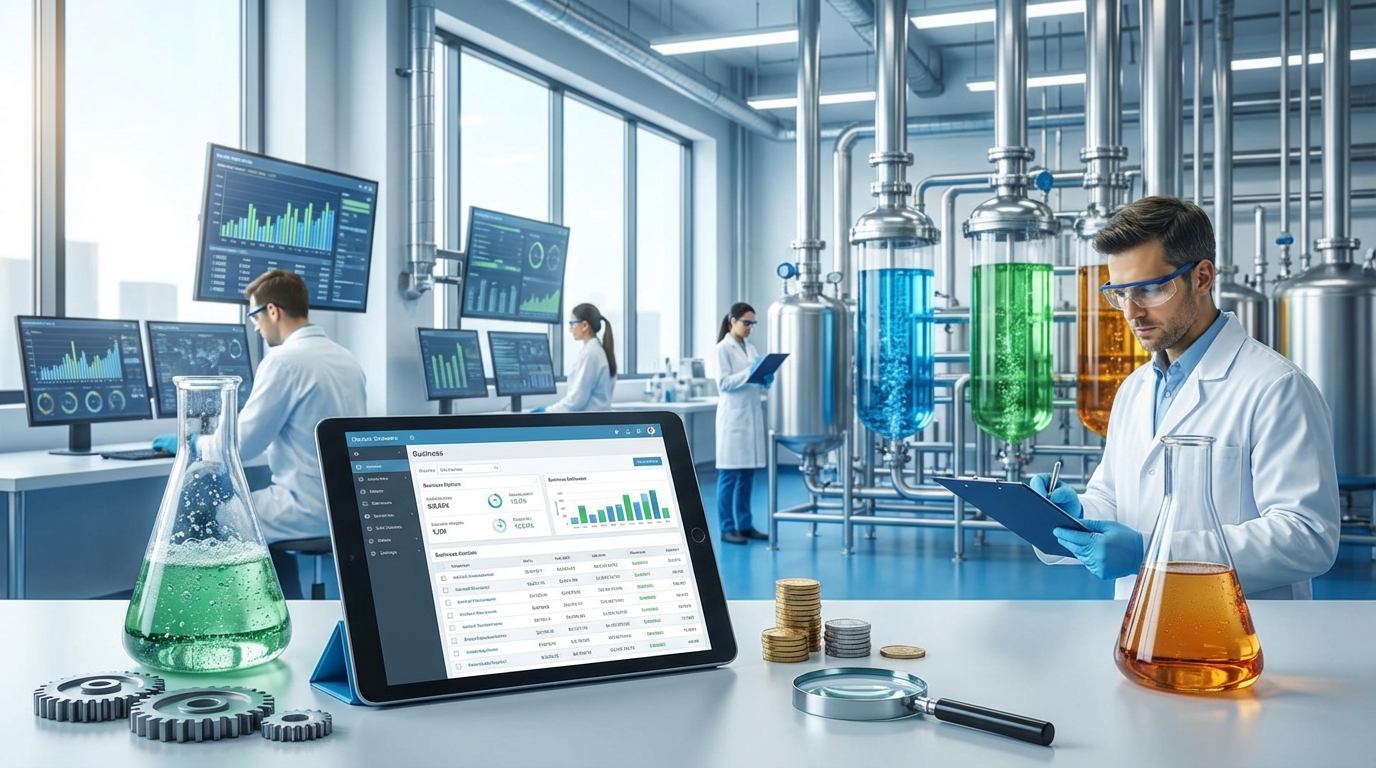
The chemical manufacturing industry is a complex beast. Unlike discrete manufacturing where you assemble parts, chemical manufacturing involves formulas, recipes, reactions, and irreversible changes. You are dealing with volatile materials, strict regulatory compliance requirements (like EPA, REACH, or OSHA), and the constant need for precise batch tracking. For years, small to mid-sized enterprises (SMEs) in this sector have relied on a disconnected web of spreadsheets, legacy accounting software, and manual logbooks to manage these complex processes.
Why? Because the perception has always been that Enterprise Resource Planning (ERP) software—the gold standard for unifying business processes—is prohibitively expensive. The names SAP and Oracle often conjure visions of multi-million dollar implementations and year-long disruptions. Fortunately, the landscape has shifted dramatically. Today, low-cost ERP solutions tailor-made for process manufacturers are not only available but are game-changers for smaller chemical operations.
The High Cost of Not Having an ERP
Before diving into affordable solutions, it is crucial to understand the hidden costs of maintaining the status quo. Relying on disparate systems creates data silos. When your inventory data doesn’t talk to your production scheduling, and your QC results aren’t linked to specific batches, you face significant risks:
- Compliance Nightmares: Generating safety data sheets (SDS) or recall reports manually is slow and prone to human error.
- Recipe Inconsistency: Without centralized formula management, product quality can drift.
- Inventory Waste: Poor visibility leads to expired raw materials or excessive stock of slow-moving items.
- Lack of Traceability: If a customer reports an issue, can you instantly trace that specific batch back to the supplier lot of every raw ingredient?
A budget-friendly ERP solves these issues by creating a single source of truth without breaking the bank.
Defining “Low-Cost” in the Chemical Sector
When we talk about “low-cost” ERP today, we aren’t talking about “cheap” or underpowered software. We are generally referring to modern, cloud-based (SaaS) platforms that have replaced the massive upfront capital expenditure of traditional on-premise systems with predictable monthly subscription fees.
These solutions lower the barrier to entry by eliminating the need for expensive in-house servers and dedicated IT teams to manage hardware. Furthermore, many modern ERPs are modular. You pay for the functionalities you need now—like inventory and formulation—and add modules like advanced CRM or plant maintenance later as you grow.
Must-Have Features in Budget Chemical ERPs
While looking for affordability, chemical manufacturers cannot compromise on industry-specific functionality. A generic ERP designed for a t-shirt retailer will fail miserably in a chemical plant. Even a low-cost solution must include:
1. Formula and Recipe Management
The system must handle complex recipes, including managing revisions, substitutes, and co-products/by-products. It needs to scale formulas dynamically based on batch size requirements.
2. End-to-End Lot Traceability and Batch Tracking
This is non-negotiable. The system must track every ingredient from receipt through production into the finished good and out to the customer. In the event of a recall, speed is everything.
3. Integrated Quality Control (QC)
QC tests shouldn’t exist on separate clipboards. The ERP should prompt for tests at specific production stages (receiving, in-process, finished goods) and hold inventory until it passes specifications.
4. Regulatory Compliance Support
Look for tools that help manage hazardous material information, generate required labels (like GHS), and assist in reporting.
Strategies for Finding Affordable Solutions
Finding the right fit requires a strategic approach. Don’t just look at the sticker price; look at the total cost of ownership and time to value.
- Focus on Process Manufacturing ERPs: Narrow your search to vendors specializing in process manufacturing. They understand things like unit-of-measure conversions (e.g., buying in pounds, using in gallons) out of the box.
- Evaluate Cloud-Native SaaS: Providers like NetSuite, Acumatica, or specialized process-industry vendors often offer tiered pricing models suitable for smaller businesses.
- Prioritize Implementation Speed: A lower software cost can be negated by a six-month implementation nightmare. Look for vendors with proven, rapid deployment methodologies for smaller companies.
Conclusion
For small and mid-sized chemical manufacturers, the era of being priced out of efficiency is over. Adopting a low-cost ERP solution is no longer just about saving money; it’s about survival and growth in a regulated, competitive market. By moving away from spreadsheets and embracing affordable, integrated software designed for process manufacturing, you gain the visibility, compliance tools, and operational control needed to scale your business safely and profitably. Don’t let the fear of cost hold your operation back; the right solution is likely within reach.