The High Stakes on the Production Line
In the food and beverage (F&B) industry, the margin for error is razor-thin. Unlike manufacturing widgets, a mistake on an F&B production line doesn’t just mean a defective product; it can mean a public health crisis, massive recalls, and irreparable damage to a brand’s reputation. Today, regulatory bodies worldwide are tightening their grip with stringent standards like FSMA (Food Safety Modernization Act), HACCP, and GFSI benchmarks.
Managing these complex requirements using spreadsheets, disparate systems, or paper-based trails is no longer just inefficient—it’s dangerous. This is where Cloud Enterprise Resource Planning (ERP) steps in, transforming compliance from a chaotic burden into a streamlined, competitive advantage.
Why Legacy Systems Fail Modern Compliance Needs
Many F&B manufacturers still rely on legacy on-premise systems or fractured software solutions. The problem with these outdated approaches is siloed data. When your quality control data doesn’t talk to your inventory data, and your procurement records are separate from production logs, creating a unified view of compliance is impossible.
Cloud ERP unifies these processes into a single source of truth, accessible anywhere. This real-time visibility is crucial for adhering to the strict demands of modern food safety regulations.
Key Ways Cloud ERP Strengthens F&B Compliance
1. Achieving End-to-End Traceability
The cornerstone of modern food safety is traceability. If a contamination issue arises, you must know exactly where an ingredient came from, which batches it went into, and where those final products were shipped. Farm-to-fork visibility is non-negotiable.
Cloud ERP systems specialize in granular lot and serial tracking. By automating data capture at every stage—receiving, production, packaging, and shipping—the system creates an unbreakable digital chain of custody. If a supplier issues a recall on a raw ingredient, you can identify every affected finished good in minutes, not days.
2. Automating Quality Control (QC) and HACCP
Compliance isn’t just about reacting to problems; it’s about preventing them. Cloud ERP allows businesses to embed quality control checkpoints directly into production workflows. You can mandate digital sign-offs for critical control points (CCPs) required by your HACCP plan before a production step can proceed.
- Enforced Testing: The system can flag ingredients that require mandatory lab testing upon receipt.
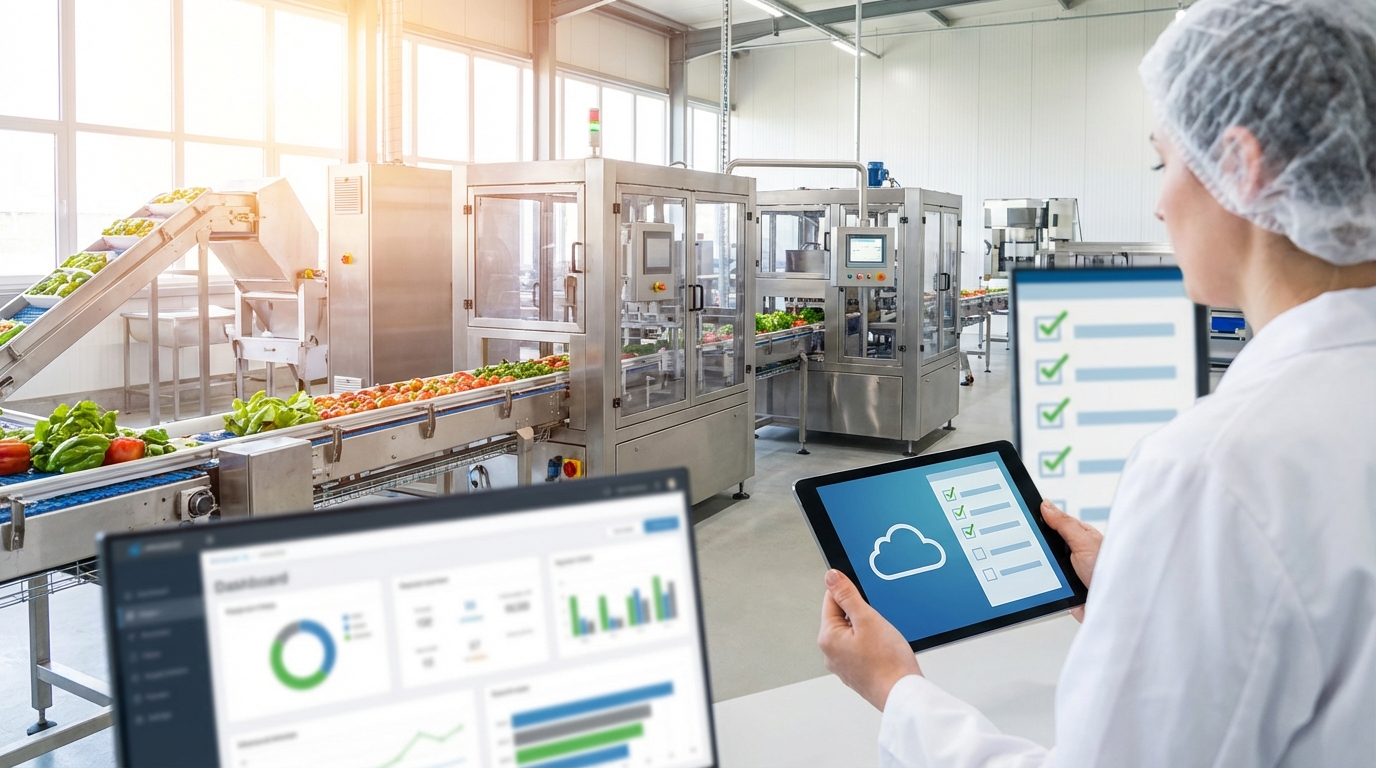
- Digital Records: Eliminate clipboard errors by capturing temperature readings, pH levels, and sanitation checks directly into tablets on the shop floor.
- Non-Conformance Management: Automatically quarantine items that fail QC checks, ensuring they never reach the shipping dock.
3. Being “Audit-Ready” Every Day
The dreaded unannounced audit can paralyze a facility that relies on paper records. Scrambling through file cabinets to prove compliance histories is a stressful and risky endeavor.
Because Cloud ERP centralizes all data—from supplier certificates to production batch records and cleaning logs—generating reports for auditors becomes a simple exercise. You aren’t just preparing for an audit once a year; your system keeps you audit-ready 365 days a year with accessible, transparent digital trails.
Conclusion: Compliance as a Competitive Edge
Viewing regulatory compliance as merely a cost of doing business is a mistake. In the modern F&B landscape, robust compliance is a marketable asset that builds consumer trust and secures retailer relationships. Adopting a Cloud ERP solution doesn’t just help you avoid fines and recalls; it provides the operational agility to adapt to new regulations quickly and scale your business safely. By digitizing and automating compliance, you can focus less on paperwork and more on what matters: delivering safe, high-quality products to your customers.